
Services
Artificial Turf
Green all year, on a Colorado water budget.
Artificial turf is synthetic grass over a prepared base. No watering, nothing to mow, and it stays green through a drought or a hard freeze. With watering rules tightening most summers, that adds up for a lot of yards.
We use it most often on the spots where real grass already lost the fight. Deep shade under a mature tree. The strip along the driveway that bakes all afternoon. A slope nobody wants to walk equipment across. A dog run worn down to dirt along the same three paths. Those spots go green and come off the sprinkler schedule for good.
Most of the work is underneath. We take out the old surface, grade it so water drains where it should, then lay and compact a base before the turf goes down. After that it's fitting, seaming, anchoring the edges, and brushing in infill so the blades stand up. Turf rolled over unprepared ground wrinkles, holds puddles, and looks wrong inside a season.
We'll also tell you where it isn't the right answer. Turf in direct summer sun gets hot, hot enough that you notice it barefoot in July. It needs a rinse now and then, more often if dogs use it. And the infill settles and needs topping up. Better you hear that before we install it than after.
What's included
Site prep: old surface out, graded to drain, compacted base
Turf fitted, seamed, and anchored at the edges
Infill brushed in so the blades stand upright
Pet areas built to drain
Small, hard-to-grow spots: deep shade, slopes, narrow strips
Turf paired with beds, rock, or a smaller real lawn
Field notes
What 20+ years here taught us
Denver gets about 14 to 15 inches of moisture a year and most metro cities run summer watering rules. Turf takes those areas off the schedule entirely.
Turf soaks up our sun. In full afternoon sun it runs a lot hotter than grass, so think twice about a big south-facing play area and lean toward shaded or north-facing spots.
Colorado turf-replacement rebates are usually written for living, low-water landscaping, and many programs exclude synthetic turf. Check your utility's rules before you count on one.
Common questions
- Does it look fake?
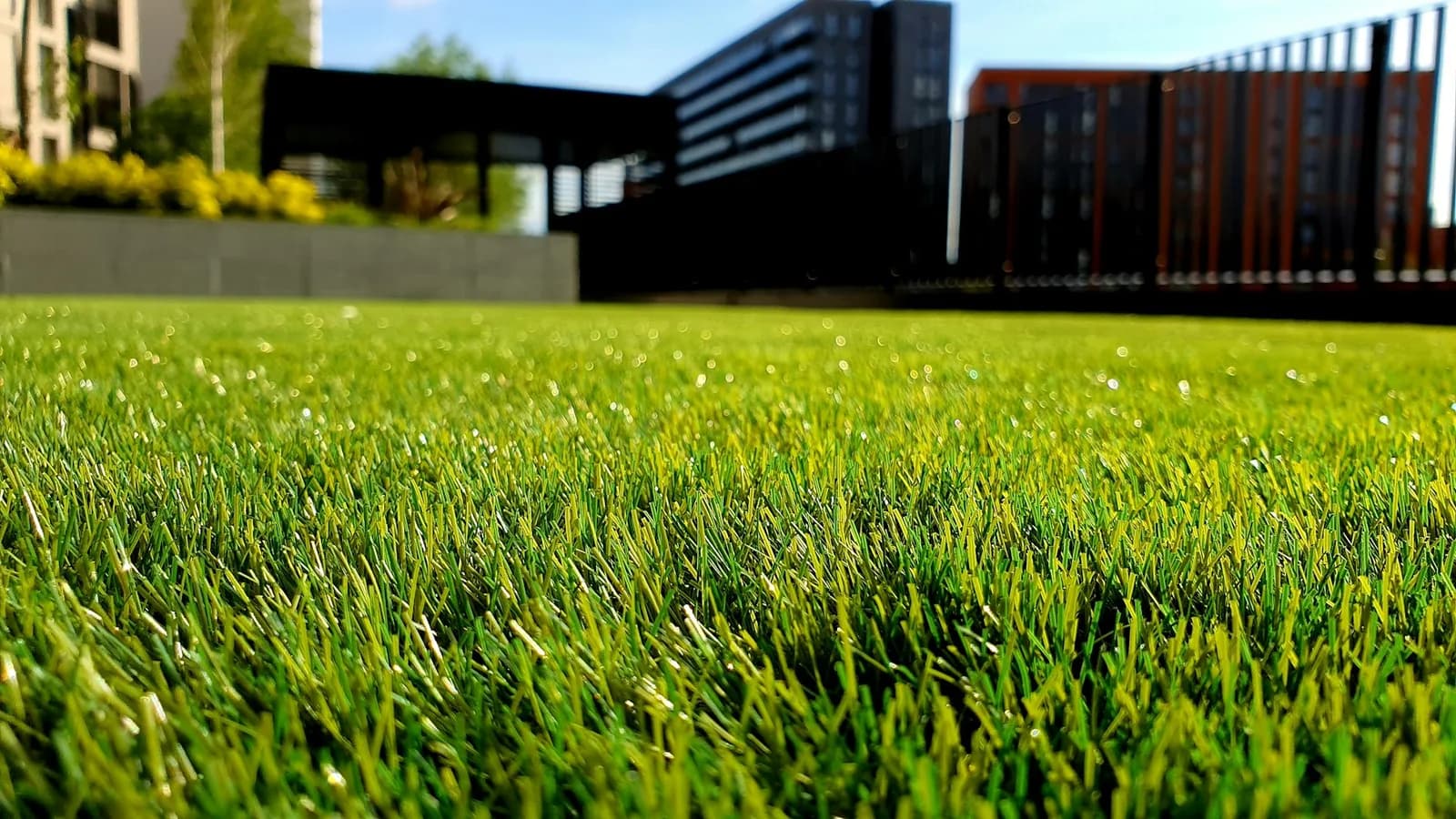
- Up close, you can tell. Anyone who says otherwise is selling. Current turf is a long way from the flat plastic green people picture, with mixed blade colors and a brown thatch layer underneath, and from across the yard most people don't look twice. The honest test is seeing a piece of it in daylight in the actual spot, so ask about that during the estimate.
- Is it good for dogs?
- It holds up well. Nothing to dig up, and no worn dirt track along their usual route. Urine drains through, but turf doesn't rinse itself the way soil does, so plan on hosing pet areas down regularly. Solids get picked up the same as on grass.
- How long does it last, and what does it need?
- It's a long-term surface, not a permanent one. Sun and traffic wear it out eventually, and how fast depends on the product and how hard the area gets used. Day to day it's easy: rinse it off, brush the traffic lanes so the blades stand back up, clear leaves, and top up infill as it settles. We'll go over care for the specific product when we quote it.
- Should I do the whole yard in turf?
- You can, and some people do. We usually suggest not to. It's a big number up front, and with no living plants anywhere the heat really adds up in July. Turf where you need a green usable surface, with beds, rock, and low-water plants around it, tends to look better and cost less.
Free estimates · Aurora, Denver & the Denver metro area
Get a free artificial turf estimate
Tell us about your project and we'll be in touch.